UK social media age restrictions for under-16s: your questions answered
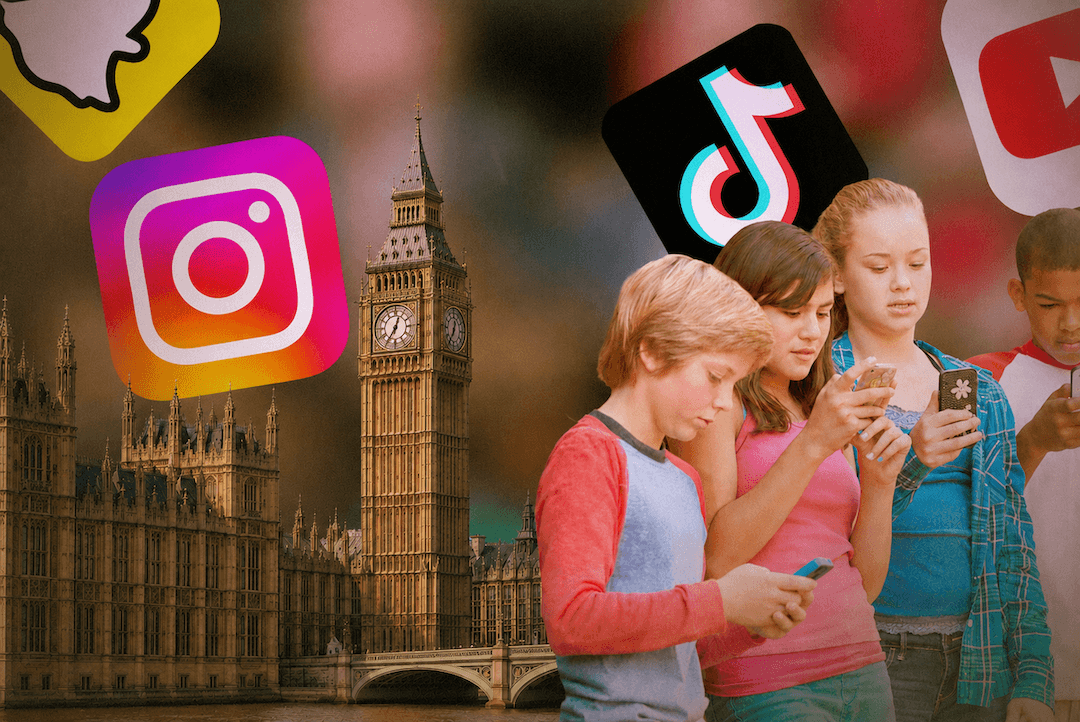
[.style-intro] The UK Government has announced it will ban social media platforms from providing their services to under-16s. Here are answers to the most common questions parents have been asking. [.style-intro]
This page will be updated as further details are confirmed, including the July 2026 statement on AI chatbots, VPNs, the digital age of consent, and restrictions for 16 and 17-year-olds.
How will the UK social media age restriction actually work?
Social media companies will be legally required to stop providing their services to anyone under 16. This means platforms must verify that a user is 16 or over before allowing them to create or access an account.
Ofcom, the UK's communications regulator, will be responsible for enforcement, not parents. Families will not face any penalties if their child finds a way around the rules. The responsibility sits entirely with the platforms.
When will the new social media restrictions come into force?
The Secretary of State for Science, Innovation and Technology, Liz Kendall, has said she wants a parliamentary vote on the regulations by the end of 2026, with the restrictions coming into force in early 2027. The Government is using powers already in place through the Children’s Wellbeing and Schools Act, which means it can introduce the rules through secondary legislation rather than a whole new Act of Parliament – which should make it faster to implement.
Why isn't this happening sooner?
Many parents want to know why, given the urgency, the restrictions won't be in force until early 2027. The Government says the timeline allows Ofcom to set the technical standards platforms must meet for age verification, and Parliament to scrutinise the regulations before they're passed. Using existing powers in the Children’s Act does make this faster than the usual legislative route.
But every month is another month without protections in place. We'll continue to push for implementation as quickly as possible.
Which social media platforms are included in the ban?
The Government has confirmed the restriction will cover platforms including:
- TikTok
- Snapchat
- YouTube
- X
The model being used is based on Australia's approach. It covers user-to-user platforms – those that allow users to post content and interact with others, and that use algorithms and recommendation systems.
There will be a narrowly defined list of exemptions to make sure educational tools, e-commerce and music streaming services are not caught up in the restriction. That list will be kept under review as technology changes.
What about WhatsApp and messaging apps?
WhatsApp and similar private messaging services are not included in this ban. The Government has been clear that parents need to be able to contact their children, and that direct messaging doesn't fall under the same category as social media platforms.
However, the Government has said it will take separate action on specific features within messaging and gaming services – including banning stranger communication (where someone a child doesn't know can message them directly), which is recognised as a key route for grooming and abuse.
Is this going to force us to get a digital ID?
No. We know this is a worry for a lot of people, so it's worth being really clear. The government has explicitly said that you will not need a digital ID to use social media, and age checks will not mean handing over government-issued ID.
What the law asks for is "highly effective age assurance," a reliable way of checking that someone really is 16 or over. But the Government has deliberately not told platforms which technology to use, which leaves room for a range of approaches. And privacy is built in from the start. Any information used to check age has to be handled under strict rules about how it's used and when it must be deleted.
The Technology Secretary has asked Ofcom to set out what good age checking should look like for 16-year-olds, and, importantly, those proposals will be published before any rules are voted on. So there's time for Parliament, and for all of us, to look at the detail properly.
Here's the reassuring part: this isn't some untested experiment. The companies that build this technology have already carried out more than a billion privacy-preserving age checks around the world. Iain Corby, who leads the Age Verification Providers Association, said on Monday: "The debate has moved beyond whether online age assurance works. The technology already exists and is being used successfully every day at enormous scale."
If you'd like to dig into the detail, you can read their full response here: https://avpassociation.com/news-release/avpa-response-to-prime-ministers-announcement-on-social-media/
Won't children just get around it with a VPN?
Some will try. As Liz Kendall put it in Parliament: "kids have always got around smoking and drinking." That doesn't mean we don't have rules.
The Government has suggested they will focus on more rigorous age assurance than Australia. Better age verification makes it harder – not just a case of ticking a box saying you're over 16.
The wider aim is a cultural shift: normalising the idea that social media simply isn't for children under 16, so that future generations don't experience the pressure of feeling like everyone their age is already on it. The policy is as much about resetting social norms for the long term as it is about the teenagers using these platforms today.
The Government has also said it will return to the question of VPNs in July, with further research being commissioned on their use by children.
What are the penalties for platforms that don't comply?
Let's start with the thing that matters most: it's the platforms that have to make this work, not you. For years, parents have been left to police this on their own, app by app, child by child, fighting some of the most powerful companies in the world from the kitchen table. That's now flipped. The law puts the responsibility squarely on the social media companies to keep under-16s off their services. And there are real consequences if they don't play ball. Ofcom, the regulator, can fine platforms up to 10% of their global annual revenue when they repeatedly break the rules. For companies this size, that's billions, not a slap on the wrist. And if a platform simply refuses to follow the law, Ofcom can go to the courts to block it in the UK altogether.
The issue is that they’ve never really used these powers. On Monday, the government has been clear that these powers are there to be used, not just waved around as a threat. In her June letter to Ofcom, the Technology Secretary, Liz Kendall, wrote:
"I am clear that this ban must be rigorously enforced from the outset. Visible, credible enforcement will be essential to building confidence that these protections are real and effective in practice and you continue to have my full support to use the full range of enforcement powers at your disposal."
She's also asked Ofcom to sharpen up its enforcement, publish a clear plan for how it'll hold platforms to account, and report to Parliament every year on how it's going, so none of this happens quietly behind closed doors.
This is one of the areas we'll be watching closely. Big Tech won't go quietly, and good rules only matter if they're properly enforced. We'll keep pushing to make sure they are.
What else is being restricted – beyond social media accounts?
The Government has announced several additional measures alongside the social media age restriction:
- Livestreaming banned from under-16s across all platforms, to reduce the risk of child sexual abuse and exploitation
- Stranger communication banned from under-16s – including in gaming – to stop grooming by people children don't know
- Sexualised AI chatbots banned from accessing under-18s – the UK is the first country in the world to introduce this restriction
- Sexualised chatbot functions restricted on general-purpose AI tools (such as features seen on X)
For 16 and 17-year-olds, livestreaming and stranger communication will be switched off by default (though users can turn them on). The Government has also said it is "strongly minded" to introduce default overnight curfews and breaks in infinite scrolling for 16 and 17-year-olds – further detail is expected in July.
What happens to children who are already on social media?
This is one of the most important outstanding questions. The legislation as announced focuses on preventing new under-16 accounts from being created once the rules come into force in early 2027. The Government has not yet confirmed what will happen to existing accounts held by under-16s.
Ofcom will consult on the implementation detail, including this question. We'll update this page when further information is available.
What about gaming platforms like Roblox?
Gaming is not included in the blanket social media restriction. The Government has said it doesn't want a blanket ban on gaming, recognising that it has significant value for children.
However, specific features within gaming – particularly stranger communication and direct messaging from unknown adults – are being targeted. The Government has said the powers in the Children's Wellbeing and Schools Act will allow it to restrict particular features and functions across services, including gaming platforms, without requiring an entirely new law each time.
Why 16?
The current minimum age for social media – thirteen – was never based on evidence about children's wellbeing. It was set to comply with US data protection law (COPPA), and the UK has used the same threshold since.
Sixteen reflects a meaningful shift. It aligns with other legal thresholds in the UK and is supported by growing evidence about adolescent brain development and the harms of social media during early teenage years..
Will this stop children accessing harmful content altogether?
Age restrictions alone won't solve every problem, even if every child complied. Children can still encounter harm through friends' accounts, through platforms not covered by the legislation, or through other routes online. The Education Committee, in its own review of the evidence, described an age restriction as "a foundation for action, rather than a complete solution" – and the Government has agreed with that framing.
Delaying smartphones for as long as possible is still the best way to protect childhood.
I'm worried about my child’s reaction. What can I do?
This will be a big change for many children – particularly those already using social media – so it's completely understandable to feel nervous about how your child might react. They might have all kinds of feelings, from anger and boredom, to relief and hope. All those feelings are completely normal. They may also have lots of questions.
Keeping an open line of communication will help with the transition. So talk to them. Children are far more likely to accept a change when they understand the reasons behind it, so you might explain why the Government has taken this step – that social media platforms were never designed with children's wellbeing in mind, and that this is about giving them time and space to grow up, not about punishing them.
You can explain that the ban is to stop unsafe platforms accessing young people, not the other way around. Children and families are not going to get into trouble if they don’t comply. It’s the tech companies who will be punished if they don’t create robust systems to prevent children from accessing their services. So if children see something online that upsets or worries them, they should still talk to a grown-up about it.
A few more things that can help:
- Watch the Prime Minister's speech together →. Hearing the reasoning directly – that this is a national decision being made to protect young people – can help children see it as something bigger than just a rule their parents have imposed.
- Use the resources made for young people →. There's a 10-minute video aimed at teenagers on the SFC website that explains why social media has been so harmful for kids in a way that speaks to them directly.
- Reach for a good book →. There are some brilliant ones out there, including The Amazing Generation by Jonathan Haidt and Catherine Price for 9–12 year olds and The Healthy Selfie by Susie Davies for older children.
Talk about the positives, too. It's easy for the conversation to focus on what's being taken away, but there's a lot to be gained. More time for friendships, hobbies, sport, sleep and simply being present, the things that make childhood.
And there's one really important shift worth holding onto: there is a world of difference between being the only child not on social media, and no one being on it. So much of the pressure children feel comes from the sense that everyone else is already there. As that expectation changes – for their friends, their classmates, their whole year group – the pressure starts to dissolve. Your child won't be the odd one out. They'll be part of a generation growing up with a different, healthier norm.
What does this mean for the future of Smartphone Free Childhood?
Smartphone Free Childhood has never been about one policy. It’s always been about the childhood we’re trying to build together.
A childhood with more freedom, more play, more independence and more connection. One where choosing to delay smartphones becomes normal, and where families who choose to wait feel empowered, not isolated.
And where children get a few more precious years to grow before the full force of the digital world arrives in their pockets.
Policy matters enormously: it can shift expectations, create new norms and make a different path easier to choose. But policy doesn't raise children, people do. The new law gives families firmer ground to stand on, but the work of changing what's normal is still up to all of us.
That’s why the work that got us here matters now more than ever. Parents talking to parents. Schools working with families. Communities deciding to stand up for childhood, together.
So here's what we'll keep doing:
- Supporting parents to drive cultural change – in their own communities and nationally.
- Championing the Parent Pact – no smartphone before 14, no social media before 16 – already signed by over 190,000 children across more than half of UK schools.
- Helping families hold the line on the new law. Big Tech won't go quietly, so parents will still need support and each other.
- Supporting parents whose children already have phones – through open conversations, useful resources and realistic guides for what parental controls can and can't do.
This page will be updated as further details are confirmed, including the July 2026 statement on AI chatbots, VPNs, the digital age of consent, and restrictions for 16 and 17-year-olds.