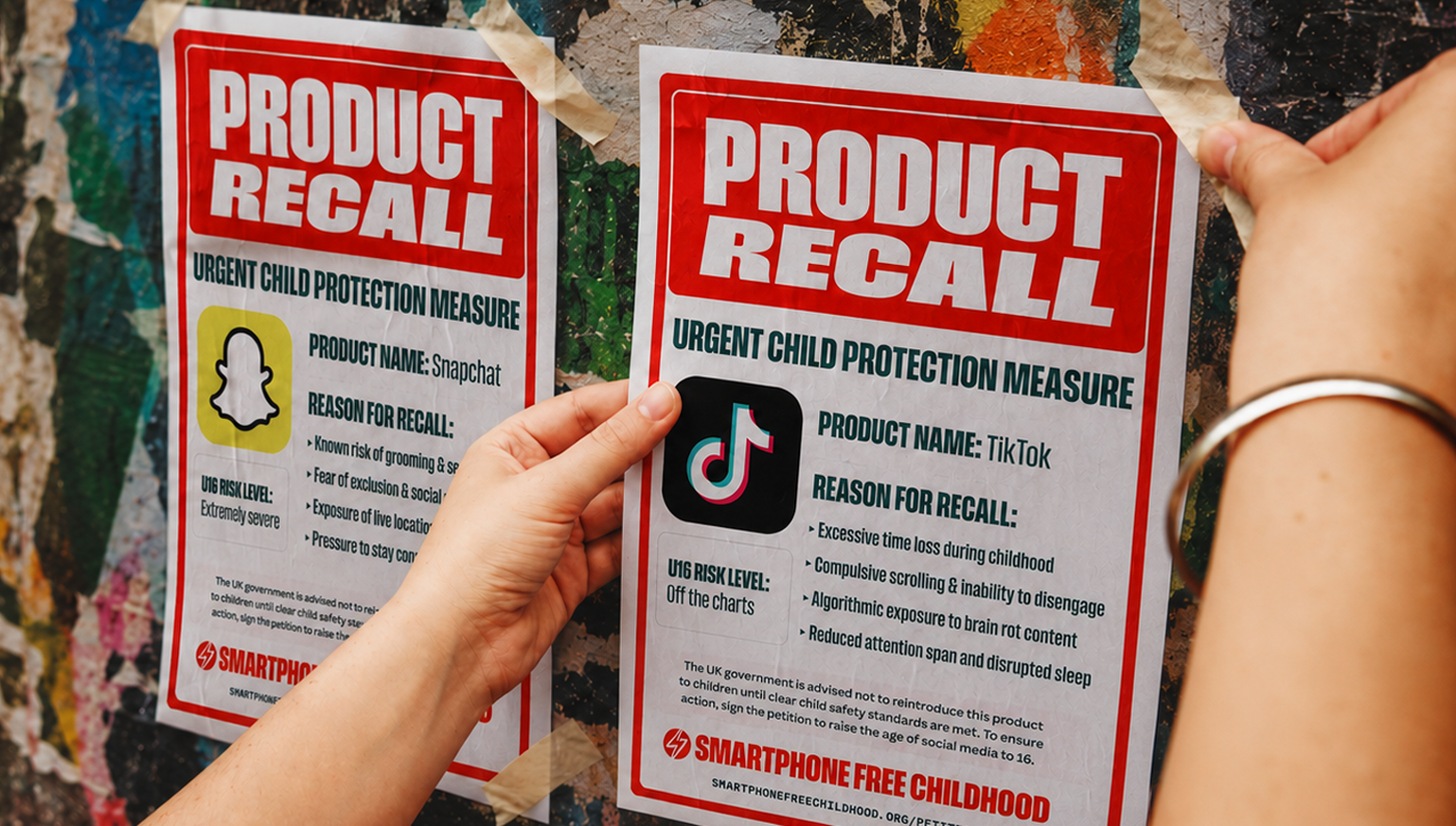
This is what people power looks like
[.style-intro] Yesterday the Prime Minister announced plans to raise the minimum age of social media to 16. [.style-intro]
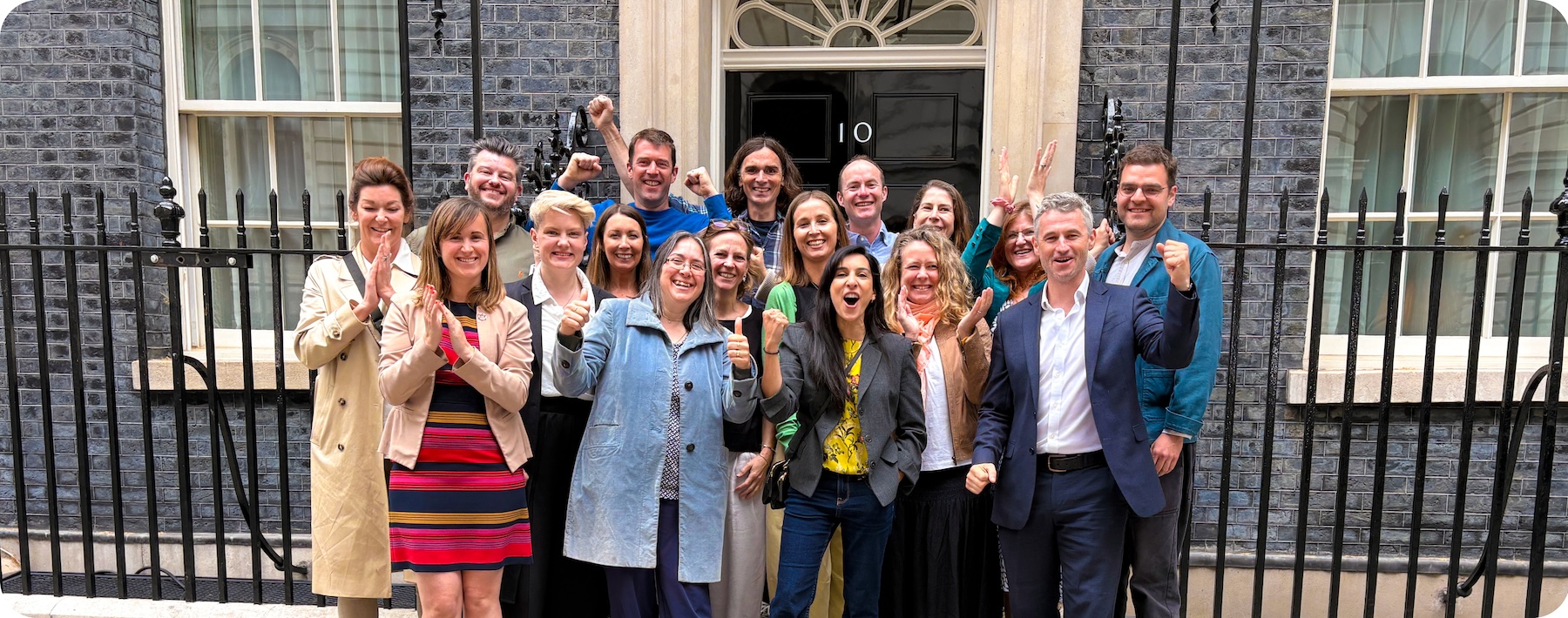
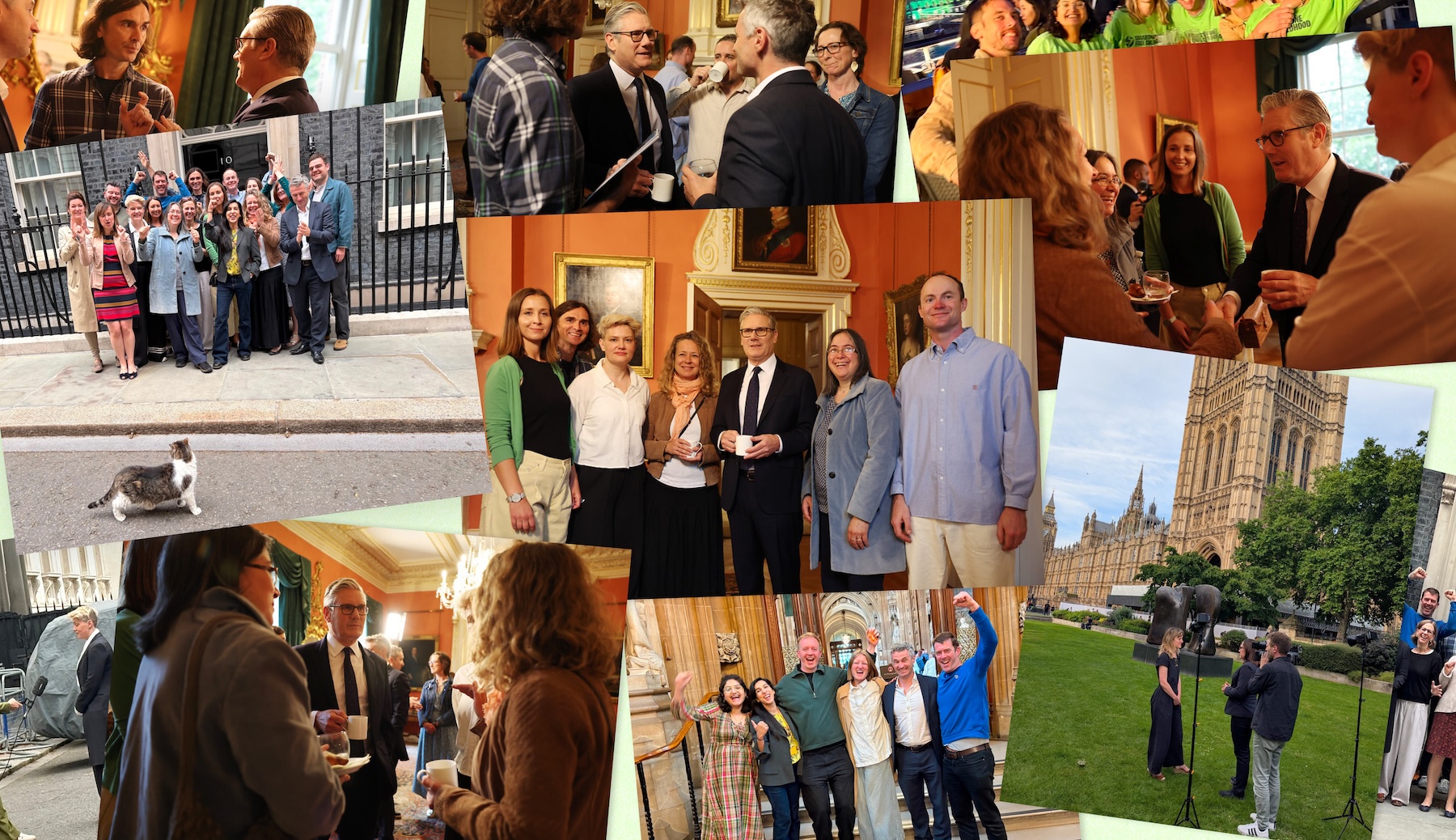
A group of 18 SFC Regional Leaders from across the UK heard the news first hand, representing British parents in 10 Downing Street alongside the world’s media.
(You might have heard them live on TV whooping in the background).
For them, and all of us, the news is still sinking in.
A couple of years ago, raising the age of social media wasn’t being debated in Westminster. Very few people were talking about it. It just wasn’t a thing.
Today, it’s government policy.
That’s extraordinary.
It’s extraordinary for the millions of children and families who stand to benefit. But it’s also extraordinary because it proves something this movement has believed from the beginning:
That when enough people come together to stand up for childhood, change is possible.
We didn’t set out to do politics
When Smartphone Free Childhood exploded into being at the start of 2024, people kept asking us the same question:
“What’s your policy ask?”
The truth is: we didn’t have one.
Not because we didn’t think policy change could help. But because we always felt that culture change mattered more.
We weren’t focused on persuading politicians.
We were focused on supporting parents.
We believed that if enough families spoke up honestly – and chose a different path together – they could create real change in their homes and communities. No politicians necessary.
But we also knew that if this movement really grew, if we helped people get properly organised across the country, then eventually our voice would be impossible for politicians to ignore.
That happened far faster than we could have imagined.
A debate about who gets to shape childhood
For years, the assumption had been simple: smartphones were here, social media was here, tech companies were all-powerful, and childhood had changed whether we liked it or not.
Genies were out of bottles, cats were out of bags, horses had well-and-truly bolted. As parents, our only option was to suck it up and get on with it.
Fast forward two years and the Government has concluded that social media, in its current form, isn’t an appropriate place for children.
That’s a phenomenal turnaround. But for us, the real significance of today isn’t only the policy. It’s what the policy represents.
Because this was never just a debate about social media. It was a debate about who gets to shape childhood. Families, communities and schools? Or a handful of ultrapowerful companies in Silicon Valley whose business model depends on capturing children’s attention at all costs?
That’s a conversation we’re proud to have helped bring into the mainstream.
Proof that people power works
Does this policy solve everything? Of course not. Will there be fierce debates about implementation, age verification and enforcement? You bet. Will the tech giants fight tooth and nail in the courts? Almost certainly.
But that’s for tomorrow.
Yesterday’s policy announcement belongs to every parent who sent a WhatsApp, started a conversation at the school gate, joined a local group, ran a stand at a school fair, or spoke to their child’s school. Every mum and dad who signed the Parent Pact. Every teacher who spoke up in a staff room. Every grandparent, carer, campaigner and young person who helped keep this conversation moving. Everyone who refused to accept that this was the best childhood we could offer our children.
The past two years have shown us what people power really looks like.
And it turns out it’s not always the slogans-on-placards variety.
SFC’s version has been collaborative, creative, persistent, determined, and powered by thousands of small acts of courage.
It has been built in kitchens and playgrounds, in school halls and WhatsApp groups. By ordinary people talking honestly about something they care about, until eventually it becomes impossible to ignore.
Reclaiming childhood is a long game
We must be clear: there is still a long way to go.
Because social media was never the whole story. And because laws alone won’t create the childhood we want for our children.
That part is still up to all of us.
This ban helps us get one step closer to a world where delaying smartphones feels normal rather than unusual. Where families who choose to wait feel supported rather than isolated. Where schools can set healthier norms, knowing their communities are behind them. And where children get a few more precious years to grow before the full force of the digital world arrives in their pocket.
Policy matters. It can shift expectations, create new norms and make a different path easier to choose.
But policy doesn’t raise children. People do.
That’s why the things that built this movement will matter now more than ever. Parents talking to parents. Schools working with families. Communities deciding, together, that childhood is worth fighting for.
And it’s why our focus will continue to be on cultural change above all else. We’ll keep working towards the same vision of childhood we’ve had since day one: more friendship, more independence, more play, more conversation, more sleep, more freedom – and a lot less time being nudged, notified and monetised.
Social media restrictions don’t get us there overnight.
But today feels like a turning point.
Not because SFC’s work is finished – quite the opposite.
Because together we’ve proved that change is possible. And that childhood can still be shaped by families and communities, not tech companies in Silicon Valley.