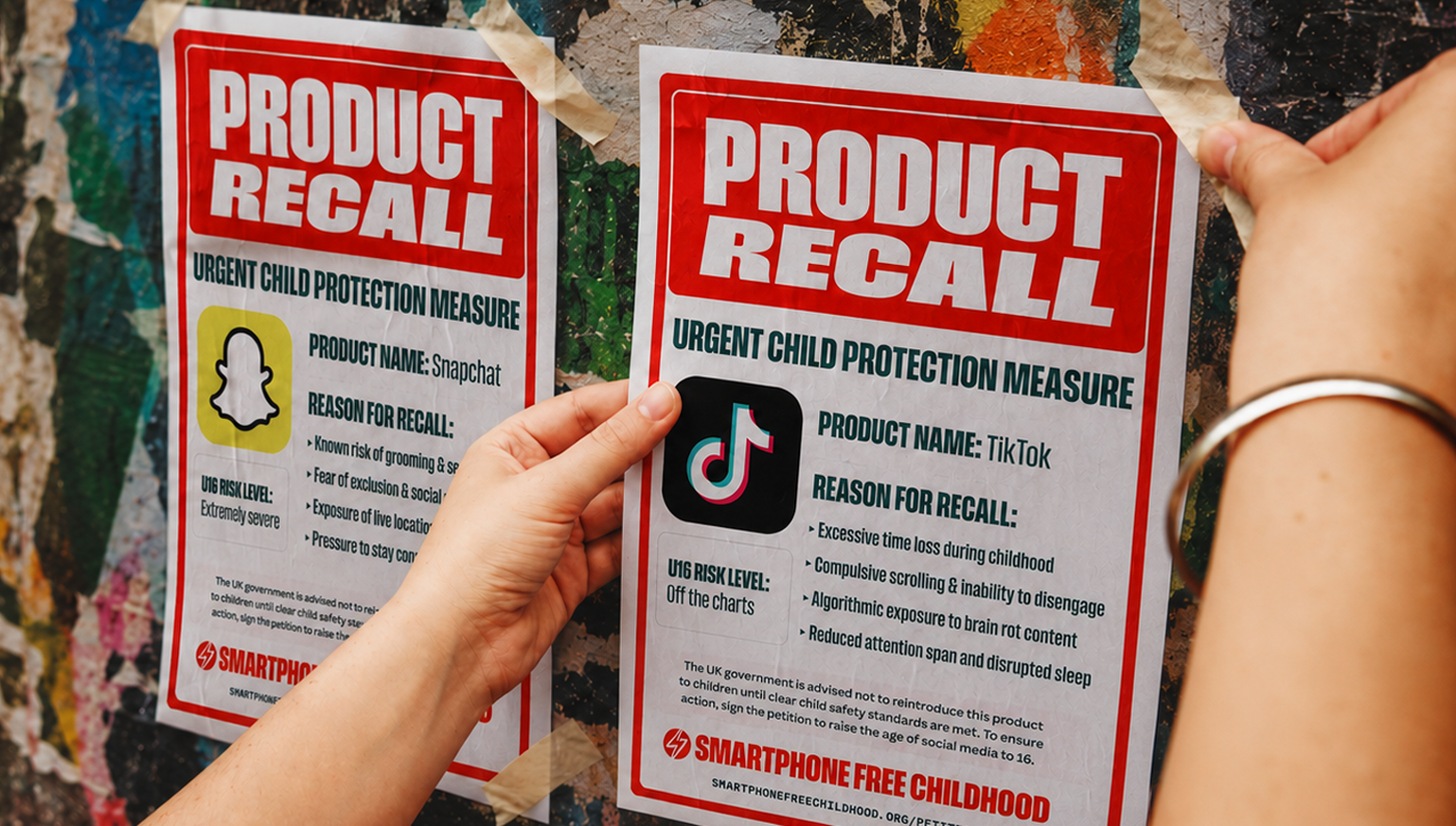
The 90s video shop… with a 2026 twist
[.style-intro] Who remembers going to the video shop on a Friday night? [.style-intro]
The excitement of browsing the aisles. The debates over what to watch. The disappointment when someone else had just rented the last copy of Honey, I Shrunk the Kids.
And, of course, the sneaky glances towards the scary, spicy or slightly sinister stuff you knew you weren’t old enough to look at.
A lot has changed since then.
Today, children carry a device in their pocket with access to more content than every shelf in every video shop that ever existed. Including the weird stuff.
And it’s no longer parents helping decide what to watch next. It’s algorithms designed by engineers in Silicon Valley.
But the strange thing isn’t that technology changed.
It’s that somewhere along the way, we stopped asking whether this made sense for childhood.
So we made a film about it.
It’s set in a real-life 1990s video shop – reimagined for the smartphone and social media era.
From the video shop to the big screen
Over the next few weeks, thanks to some top-level wangling from a handful of brilliant SFC supporters (more on them below), this film will be playing in cinemas across the UK.
Which feels seriously surreal.
Seeing Smartphone Free Childhood on the silver screen feels like another sign of how far this conversation has come.
A couple of years ago, hardly anyone was talking about children and smartphones.
Today, a grassroots movement about it is showing up in cinemas and prompting people to ask a simple question: When did all of this become normal?
Whatever happens politically over the coming weeks, that’s the question we’re trying to put at the centre of the national debate.
Because policies matter. But culture matters more. And helping people see the status quo with fresh eyes has always been at the heart of what SFC is trying to do.
Recreating a 1990s video shop
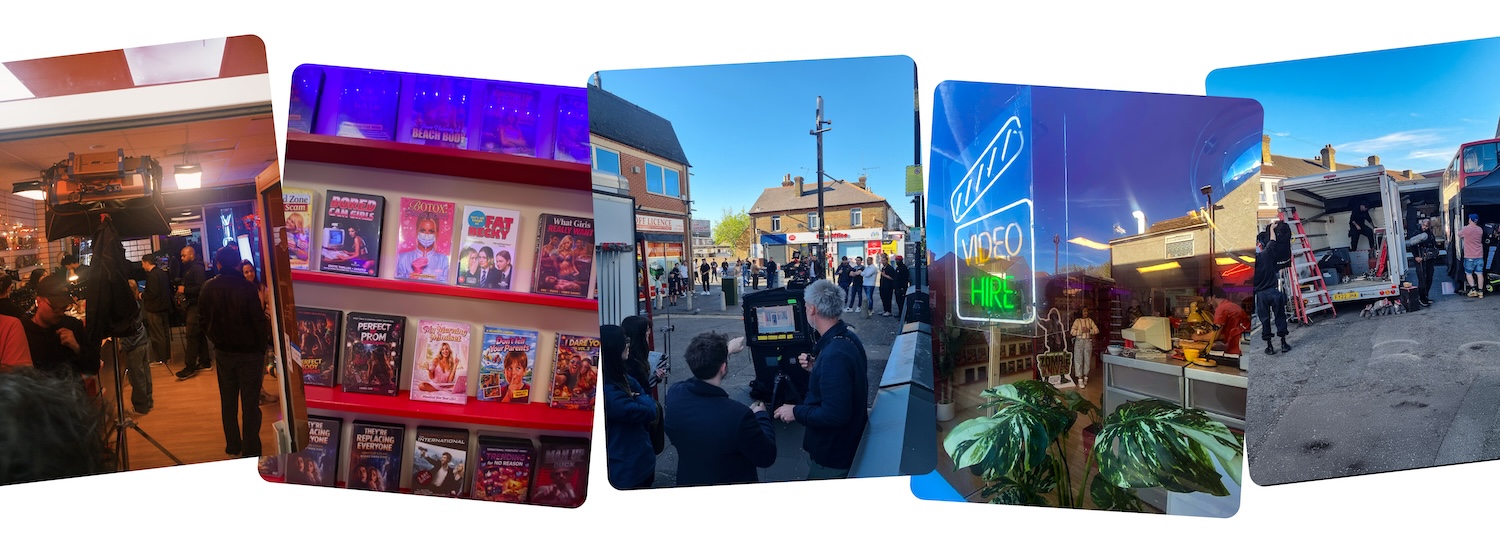
For one day, an empty shop in Slough was transformed into a fully functioning 1990s video shop.
Not by AI. By real people building a real thing.
Production designers, location managers, set decorators, stylists, editors, composers, sound designers and dozens of other creative specialists came together to create the world from scratch.
The shelves. The VHS boxes. The posters. The tiny details hidden in every corner of the shop (it really is worth a second watch to spot them).
Watching it come together was a humbling experience. Because many of the people involved are more accustomed to working on major advertising campaigns, blockbuster productions and global brands than grassroots movements about childhood.
Yet they brought exactly the same care, craft and attention to detail to this project.
The result is a 60-second film. Behind those 60 seconds sits hundreds of hours of work.
The people who made it happen
This film exists because an insanely talented group of people decided this issue was worth their time, talent and energy.
Special thanks go to Arts & Sciences, whose generosity, belief in the mission and willingness to put real resources behind the project transformed a rough idea into a film that will now be seen by audiences across the UK.
We have to give a huge shout-out to their Managing Director James Bland, Executive Producer Charlie Orr and Director David Dearlove, whose belief, creativity and production wizardry were the driving forces behind the project.
Huge thanks also go to the wider Arts & Sciences team, the editors at Stitch, the post-production team at Black Kite, the sound designers at 750mph, Twenty Below Music and the many talented individuals who contributed their expertise throughout the process.
A reminder of what this movement can do
One of the most incredible things about building Smartphone Free Childhood has been discovering just how many talented people care deeply about this issue.
People contribute in all sorts of ways. Some organise local groups. Some speak to politicians. Some run school fairs, community events or just start conversations with friends.
And occasionally, some build an entire 1990s video shop in Slough and turn it into a cinema advert!
CREDITS
Production Company: ARTS & SCIENCES
Director/Creative Director: David Dearlove
Producer: Kwok Yau
Managing Director: James Bland
Executive Producer: Charlie Orr
Production Manager: Jemimah Frost
Location Manager: Sandeep Prasad
1st AD: Sascha Marden
2nd AD: Elvis Scanlon
Runner: Kai Rajakulasingam
Runner: Sonny Hume Paton
Runner: Daniel Navin
DOP: Linda Wu
Focus Puller: Glenn Coulman
Clapper Loader: Nicola Braid
DIT: Paul Clements
Playback op: Marc Booth
Sound Recordist: Jermaine Monero
Key Grip: Thomas Treveli
Gaffer: Mark Lane
Electrician: Joe Hunt
Electrician: Archie Burton
Electrician: Gonçalo Lopes
Production Designer: Julian Nagel
Set Decorator: Molly Hackney
Stylist: Daisy King
Props Master: Matt Saunders
Graphic Designer: Jo White
Art Dept Assistant: Nuria Prat-Ortilles
Art Dept Assistant: Grace Silby
Art Dept Assistant: Hannah Mingay
H&MU / wardrobe: Emily Newson
H&MU/ wardrobe assist: Tracey Kitara
Paramedic: Wayne Sturt
Editor: Max Windows
Assistant Editor: Ruoyu Ou
Edit Co: Stitch
Post Production: Black Kite
VFX Supervisor: Phil Oldham
VFX Lead: Emily Govinden
Colour: George Kyriacou
Senior Producer: Phil Brewster
Sound Company: 750mph
Sound Design + Mix: Sam Ashwell and Marcin Pawlik
Executive Producer: Olivia Ray
Head of Production: Rachel Saxon
Music Company: Twenty Below Music
Executive Music Producer: Emily Pritchard
Music Producer: Luke Barham
Composer: Si Begg