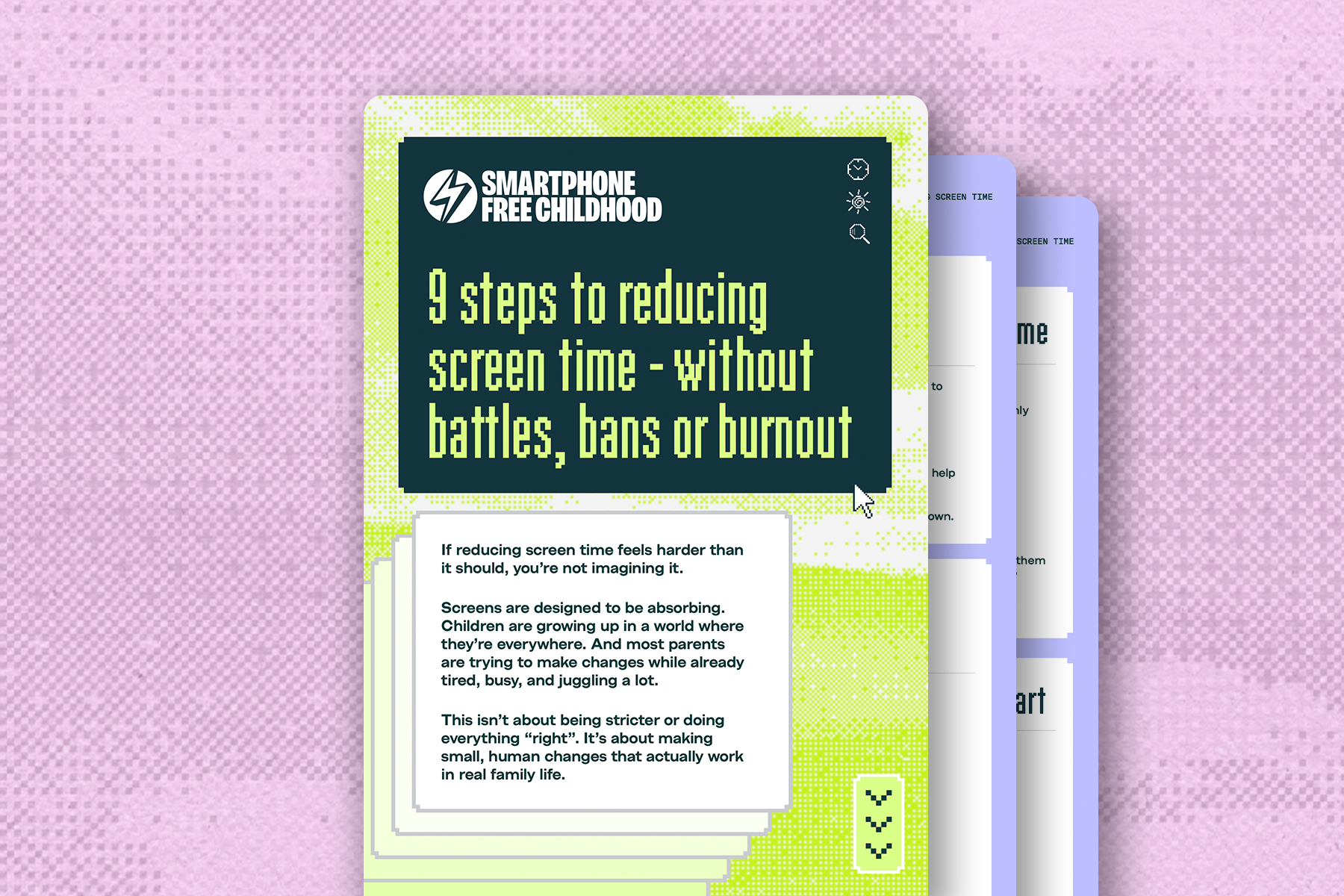
How can I reduce my child's screen time without battles?

[.style-intro]If reducing screen time feels harder than it should, you’re not imagining it.[.style-intro]
Screens are designed to be absorbing. Children are growing up in a world where they’re everywhere. And most parents are trying to make changes while already tired, busy, and juggling a lot.
This isn’t about being stricter or doing everything “right”. It’s about making small, human changes that actually work in real family life.

01. Think about what screens quietly push out
Instead of asking how much screen time is too much, it can help to notice what screens are replacing.
Sleep. Outdoor time. Messing about. Boredom. Chatting. Doing nothing in particular.
This isn’t about guilt. It’s about gently protecting the things that help children feel well.
When those things are in place, screen time often shrinks on its own.


02. Make screen-free the default, not the punishment
When screens are something that are constantly being “taken away”, they start to feel even more important.
Try flipping it:
- Some parts of the day are simply screen-free
- No debates, no long explanations
- Calm, predictable boundaries
Mealtimes. Mornings. Bedrooms. Short journeys.
“These times just don’t include screens in our family.”
The calmer and more boring this is, the easier it becomes.

03. Reduce immersion, not just time
Not all screen use has the same impact.
A powerful shift is to make screens less immersive, rather than only focusing on minutes.
For example:
- Watching on a shared TV instead of personal devices
- Keeping screens in communal spaces
- Avoiding headphones where possible
- Turning off autoplay
When screens are visible and shared, kids often come away from them more easily.

04. Plan the ending before you start
Most conflict happens at the end of screen time.
Instead of:
“You’ve got five more minutes.”
Try:
- “When this episode ends, we’re heading outside.”
- “After this level, it’s time for dinner.”
- “Screens finish, then we…”
Always name what’s coming next. Clear endings feel safer than sudden ones.

05. Protect tired moments
Screens are most tempting when kids are hungry, exhausted, overwhelmed or bored.
Those moments don’t need more rules – they need more support.
A snack ready after school.
Music instead of a device.
A bit of connection before asking them to switch off.
Reducing screen time often means meeting tiredness with care, not technology.

06. Create a few strong alternatives
You don’t need endless activities. You need a handful of things that reliably compete with screens.
This might be:
- A game everyone actually enjoys
- Audiobooks for downtime
- Outdoor habits that are easy and familiar
- Creative projects that can be dipped into
Rotation helps. Put things away and bring them back later. Novelty still works.

07. Share screens sometimes
Connection changes everything.
Watching together occasionally, laughing, commenting, turning it off together – all of this reduces the grip screens can have when they’re private and solitary.
It’s not about approving everything they watch. It’s about staying present and involved.

08. Expect boredom – and welcome it
Boredom isn’t a problem to fix. It’s often the doorway to play, creativity and self-direction.
You don’t need to rescue it.
You don’t need to fill every gap.
A bored child with loving boundaries is not missing out.

09. Change one thing at a time
The families who make lasting changes don’t overhaul everything at once.
They:
- Choose one boundary
- Let it settle
- Build from there
Progress beats perfection every time.
This isn’t about being anti-tech. It’s about protecting childhood.
Smartphone Free Childhood is a growing movement of families choosing a more balanced approach to technology – especially during the years that matter most.
Join us for practical resources, shared confidence, and a sense of not having to figure this out on your own.