Which brick phones do schools allow under no-smartphones-on-site policies?

As more secondary schools move towards no smartphones on site, many families are finding the change comes with real benefits. Clear school rules make it easier for parents to choose a simple phone, without feeling pushed into buying a smartphone earlier than they’d like.
For pupils, it can ease the transition to secondary school too. When brick phones are the norm, there’s less pressure to be online, keep up with apps, or stay plugged into group chats – both in school and beyond.
That leads to a very practical question for families and schools: if smartphones aren’t allowed, which phones actually are?
Schools that have already made this shift say that clarity makes everything easier – for staff, for pupils, and for parents. Rather than leaving families to guess, many schools now spell out which phones are acceptable, often by naming a small number of devices that are allowed on site.
The simplest option: call and text only
Because smartphones are typically defined as internet-enabled devices, some schools take the most straightforward approach and allow only phones that call and text.
In practice, this usually means no internet and no camera. Schools choosing this route explain that many of the challenges they are trying to reduce – including distraction, online messaging, bullying and safeguarding concerns – are closely linked to internet access and content sharing.
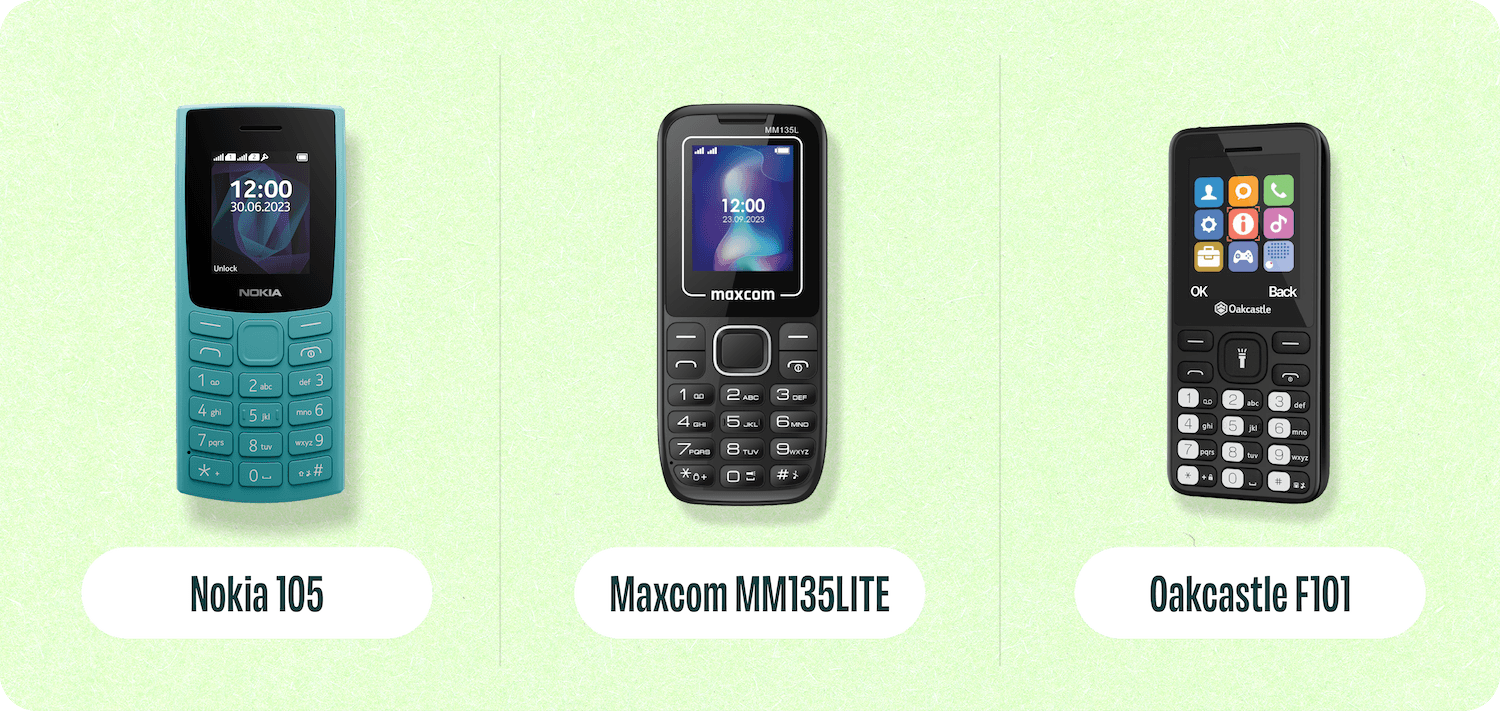
Phones such as the Nokia 105 (2G or 4G), Maxcom MM135LITE Classic, and Oakcastle F101 are commonly referenced in these policies. They are low-cost, durable, and very clearly not smartphones, which makes expectations easy to understand and enforcement straightforward. (Remember to pair them with a no data SIM to ensure it's call and text only - without this some brick phones can still access the internet.)
Because these devices are affordable and widely available, many schools see them in much the same way as other uniform requirements: a simple, accessible standard that works for all families, regardless of background.
This is the approach taken by schools such as Fulham Boys Academy, where clarity and consistency are central to making the policy work day to day.
Similarly, The Misbourne in Buckinghamshire has taken a practical approach by recommending a short list of five affordable phones that meet its policy. By doing so, the school removes guesswork for families and makes expectations clear from the outset.
Clearly non-smartphones, with some flexibility
Other schools choose to allow a slightly wider range of clearly non-smartphones, as long as those devices remain child-safe and easy to recognise at a glance.
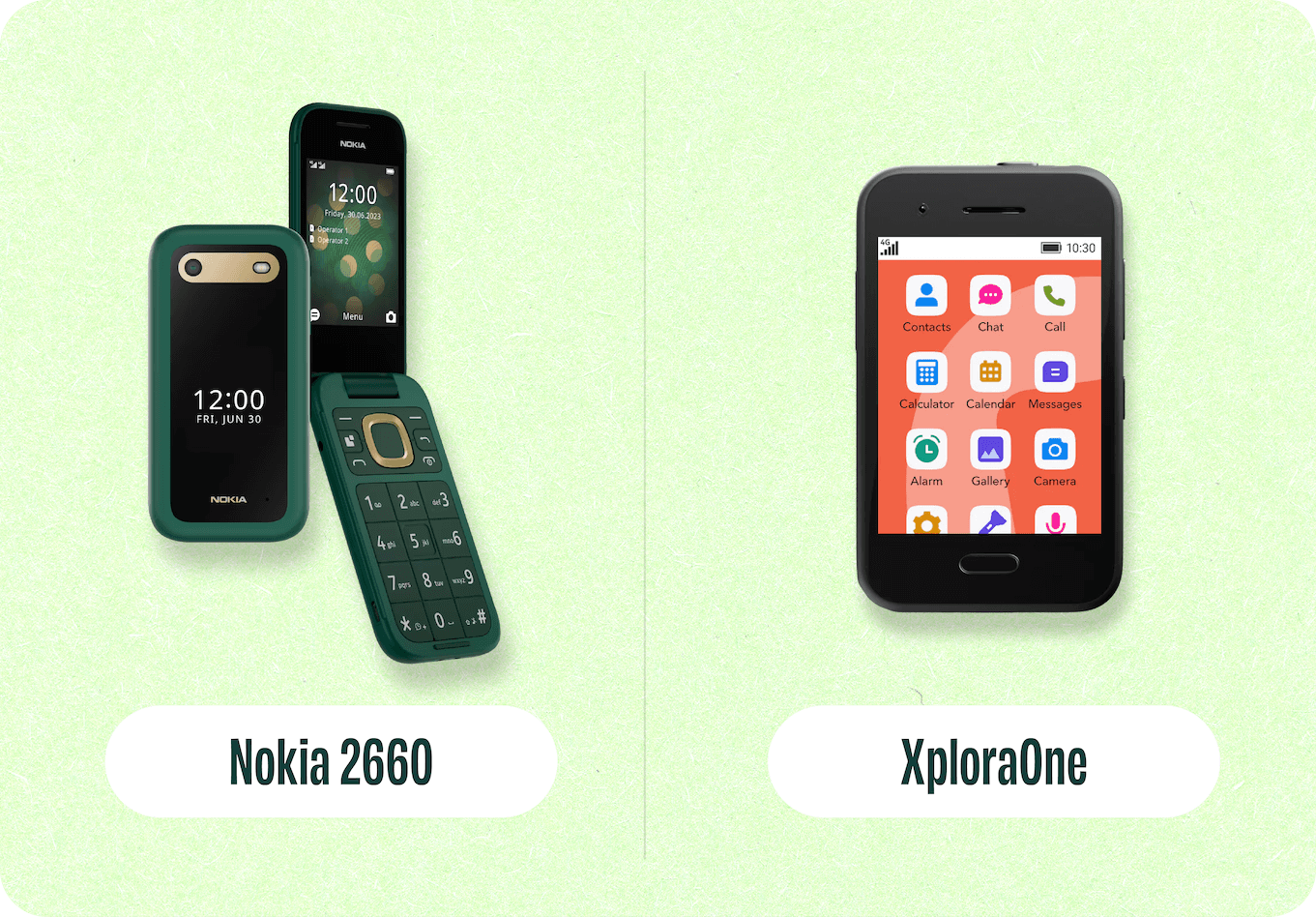
Flip phones such as the Nokia 2660 are sometimes included because they are immediately recognisable as simple phones. While these devices may include a very basic camera, they cannot send or receive images, which significantly reduces the risks associated with image sharing.
Note: the Nokia does include a basic browser and a Facebook shortcut that can’t be removed. Browsing is very clunky, and a data-free SIM blocks internet access entirely.
For these schools, the deciding factor is not the feature set, but what staff feel confident identifying and enforcing on their own site, without needing to check settings or debate specifications.
A school in Suffolk has chosen to include the XploraOne on its sanctioned list, because it's designed as a child’s first phone, and its distinctive size makes it easy for staff to recognise on site. While it has a touchscreen and includes a camera that can take and send photos to approved contacts, it has no internet access, no social media and no open messaging apps.
Some schools find that allowing limited-function devices like this can help reinforce healthier, age-appropriate technology use, rather than pushing smartphone use beyond the school gate. Where a permitted phone meets everyday communication needs, pupils may be less likely to carry a second, unrestricted smartphone at home.
This reflects an important point: there is no one-size-fits-all answer. Schools differ in context, community and confidence around enforcement. But where schools take ownership of defining a small, clearly child-safe range of phones – and apply those rules consistently – no-smartphones-on-site policies don’t just work on paper. They reduce pressure on families, level expectations for pupils, and help create school environments where children can learn, grow and thrive, free from the constant pull of online platforms and attention-shaping algorithms.